

The pharmaceutical sector requires exactness, purity and consistency at all levels of manufacture. Every single step of the production cycle must be done to strict standards of quality and safety.
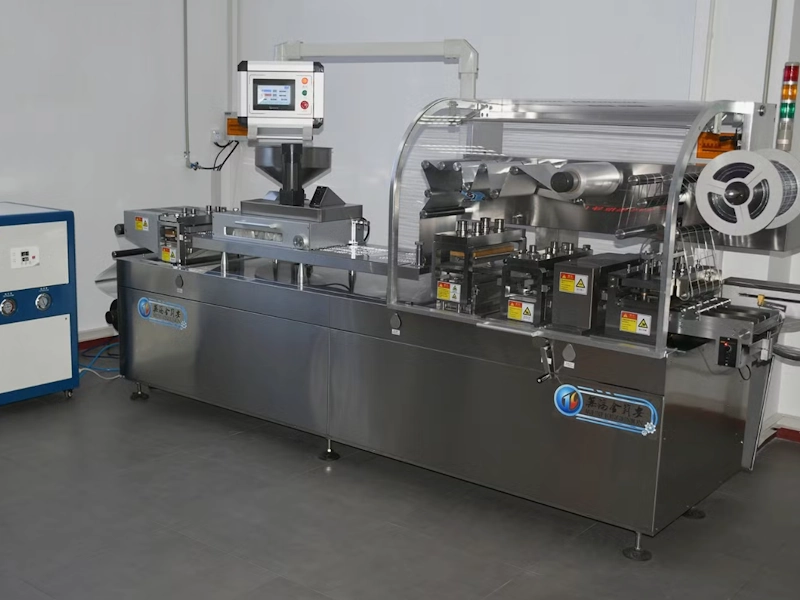
In this case, one of the most significant tools in pharmaceutical industry is blister packaging machine. It is relied upon by the pharmaceutical industry to package medicine in a secure manner.
With the advent of blister packaging machines, the way in which medicines are packaged has been transformed. It has led to an increase in production rates, precise sealing of products, reduced risk of contamination, extended shelf-life and compliance with international regulations relating to medicinal products.
This article will explore the functionality and types of blister packaging machines in pharmaceutical industry and their importance. It also explains its benefits for contemporary health care organizations.
What Is a Blister Packaging Machine?
A blister packaging machine is an advanced piece of manufacturing machinery. It is used to create the cavity on your product (generally made of plastic or aluminum) and attach it to the backer material so that once attached. This ensures a protective barrier against moisture, oxygen, light and contamination; and also make it easier for the end-user to access each dose.
Because blister packaging can produce pharmaceuticals with such consistent results and high degree of accuracy, it is needed in almost all facilities that manufacture pharmaceuticals.
Why Does the Pharmaceutical Industry Rely on Blister Packaging Machines?
As every manufacturer needs to be sure that their products remain safe from when they leave the production area until they reach the patient, a company uses a blister packaging machine to ensure their product is contained in an airtight and tamper-evident package.
Some key reasons why pharmaceutical companies choose to use them include:
- Consistent Quality of Products
- Fast Production Rates
- Accurately Packed Dosage Products
- Compliance with Regulations
- Reduced Risk of Contamination of Products
- Extended Shelf-Life for Products
- Safer Medications for Patients
With an increase in global demand for pharmaceuticals, automated blister packaging systems are becoming a necessity for large-scale production operations.
Why Has Pharmaceutical Blister Packaging Become The Most Preferred Type Of Packaging Method?
Pharmaceutical blister packaging has become the leading form of packaging for tablets and capsules as well as other oral medications. This is because it provides effective protection for products and allows users to easily take their medication. Unlike bottles, blister packs enclose each dose separately. This eliminates the possibility that every time the bottle is opened, the remaining tablets may come into contact with either air or moisture.
There are several advantages associated with medical blister packaging. These include:
- Protection of Each Dose
- Better Hygiene
- Longer Shelf Life
- Easier Tracking Of Dosage Amounts
- Reducing Errors That May Occur Due To Incorrect Dosage
- Simplifying Convenience For Consumers
- Tampering Evidence
How Do Blister Packaging Machines Function?
While designs may differ among manufacturers, most machines function similarly during the production process.
1. Feeding Film
Film (plastic or aluminum) is fed into the machine.
Commonly utilized film includes:
- PVC
- PET
- PVDC-Coated Films
- Aluminum Foil
2. Cavity Formation
Using heat or pressure (and cold formation for aluminum), cavities are created that correspond to the size of the products.
Each cavity is specifically engineered to hold a single tablet or capsule safely.
3. Filling Cavities
Products are automatically inserted into each cavity utilizing precision feeding mechanisms.
Sensors confirm that each cavity contains the correct amount of product.
4. Sealing Cavities
Once cavities are filled with product, cavities are sealed using aluminum foil or laminated backing material.
Heat sealing produces an impermeable barrier around the product, protecting medicines from external conditions.
5. Print and Coding
Information necessary to identify products is printed on packaging via direct printing. Examples of this include:
- Batch Numbers
- Manufacturing Dates
- Date of Expiration
- Name and Product Identification Number
- Serial Numbers
- QR Code
6. Cutting and Finalizing
Cavities are cut off from the continuous sheet of film or foil, producing separate sheets of blister cards. They are ready for examination, packaging and delivery.
Types of Blister Packaging Machines
Depending on the production capacity and type of packaging desired by the various pharmaceutical manufacturers, there are many variations available.
Full Automatic Blister Packaging Machines
Fully automatic systems complete all phases of packaging with limited or no assistance from personnel. Examples of some of the positive attributes related to fully automatic machines include:
- Fastest Possible Production Rate
- Highest Degree of Consistency
- Minimum Labor Costs
- Least Handling Required for Product
- Maximum Operating Efficiency
Due to their high-speed capabilities, fully automatic machines are typically used in larger pharmaceutical manufacturing companies.
Semi-Automatic Blister Packaging Machines
Systems requiring personnel involvement at selected stages of processing are referred to as semi-automatic. Semi-automatic machines are typically utilized by:
- Companies Producing Limited Quantities
- Laboratories Performing Research
- Vendor Manufacturers
- Testing Units (Pilot Plant)
Rotary Blister Packaging Machines
Rotary machines employ continuously rotating stations to accomplish extremely rapid packaging speeds. They are suited for large-scale mass production of pharmaceuticals.
Flat Plate Blister Packaging Machines
Flat plate machines employ flat sealing plates to generate highly precise seals. These machines are frequently employed when high-precision sealing is required due to product characteristics.
Important Attributes of Modern Blister Packaging Machines
Modern machines incorporate sophisticated automation and inspection technologies to enhance performance and reliability. Some examples of popular features found in modern machines include:
High-Speed Production
Modern machines are capable of generating thousands of blister packs per hour without impacting accuracy.
Vision Inspection Systems
Built-in cameras inspect products for:
• Missing Tablets
• Broken Capsules
• Incorrect Positioning
• Defects in Seal
Packages containing faulty items are rejected immediately.
Digital Displays/Touchscreens
Users can rapidly make adjustments to machine parameters using intuitive digital interfaces.
Motor Servos
Servo motor driven systems provide enhanced precision while reducing power usage.
Record Keeping Data
Numerous regulatory bodies require records of production-related data for compliance purposes. Many modern machines generate:
• Data regarding production batches
• Set parameters used during production
• Data related to inspections conducted on produced goods
• Name/Employee ID of person involved in production process
Considerations When Selecting A Blister Packaging Machine
When looking for a suitable blister packing machine, there are many factors to consider, some of which are specific to each company’s needs and products. Some common things to consider include:
- The production rate desired
- The type of packaging material used
- The speed at which the machine operates
- The level of Automation available
- The size of the products being packaged
- Local government regulations related to packaging
- The ease of performing maintenance on the equipment
- The energy usage required by the equipment
- Will this equipment be needed long term?
Choosing the best option for your operation allows you to produce and package products efficiently while meeting all local packaging laws and regulations.
Summary
In addition to providing safe and quality medicines to patients, a blister packaging machine in pharmaceutical industry plays an important role in delivering medicines safely and securely. Not only does automation help improve production speed but it also minimizes the risk of contaminating products and ensures compliance with governmental regulations.
Combining the reliability of blister packaging systems with today’s advanced technology continues to provide a method to keep medicine protected during its entire lifetime, while improving patient safety and accessibility.
