

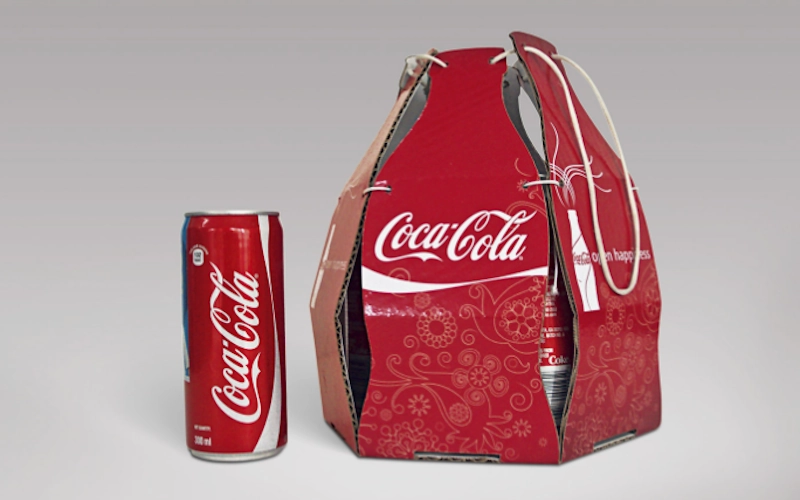
Current industry changes continue influencing discussions in the international packaging business as top consumer brands continue their sustainable development projects.
Although some stories about the latest developments in the packaging industry are connected to innovative developments within the luxury perfume market, there is another type of packaging catching public attention.
For example, Coca-Cola has been revising its packaging strategy so that it becomes recyclable.
This fact shows how big companies respond to modern demands through innovative approaches in packaging.
Packaging has become one of the key fields of sustainability investments for consumer companies.
Manufacturers review each phase of the packaging life cycle, starting with materials procurement to packaging disposal.
In the context of modern consumers’ expectations, the industry continues innovating in the sphere of packaging.
The new initiatives regarding packaging at Coca-Cola show how market dynamics are changing.
This firm continues investigating options for using more recyclable materials and creating more efficient systems for collecting and recycling.
Packaging is necessary for the protection of beverages, preservation of their freshness, and efficient transport.
Nevertheless, the company should take into account environmental responsibility when planning the strategy of packaging in the future.
Experts in the industry highlight the fact that recyclable packaging allows not only to pursue environmental goals but also business objectives.
The materials that can be recycled efficiently allow avoiding waste of landfills and conserving natural resources.
They allow developing more circular production systems, where materials are used for a longer period of time than in one-time-use products.
Packaging innovation has accelerated across the beverage industry during recent years.
Companies continue investing in lighter bottles, recyclable labels, improved closures, and packaging designs that simplify material recovery.
These improvements may appear small individually, but together they create meaningful environmental benefits throughout the product lifecycle.
Every design decision contributes toward reducing overall packaging waste.
Consumer expectations continue driving these improvements. Many shoppers actively seek products packaged in environmentally responsible materials.
Packaging often influences purchasing decisions alongside product quality and price.
Businesses recognize that sustainable packaging strengthens customer trust while supporting long-term brand reputation.
This growing awareness encourages continued investment in recyclable packaging technologies.
Industry analysts explain that recyclable packaging must also deliver reliable performance.
Beverage containers require strength, durability, and safety throughout production, transportation, retail display, and consumer use.
Manufacturers therefore focus on balancing environmental responsibility with practical functionality.
Advanced material engineering helps achieve both objectives without compromising product protection.
Material selection plays an important role in recyclable packaging development.
Companies increasingly evaluate the environmental impact of plastics, paper, aluminum, and other packaging materials.
Improvements in manufacturing technologies allow producers to create stronger packaging while using fewer raw materials.
These efficiencies reduce resource consumption and lower environmental impact across supply chains.
Packaging designers also simplify package construction wherever possible. Reducing unnecessary material combinations improves recycling efficiency.
Simple designs help recycling facilities separate valuable materials more effectively.
This approach strengthens circular economy efforts while improving the overall value of recovered packaging materials.
Collaboration across the packaging supply chain continues expanding. Brand owners, packaging manufacturers, recyclers, material suppliers, and environmental organizations increasingly work together to improve recycling outcomes.
Shared knowledge supports innovation while helping industries overcome technical challenges associated with recyclable packaging production and recovery.
Government policies also influence packaging development. Many regions continue introducing regulations that encourage recycling, reduce packaging waste, and promote responsible material management.
Companies preparing for future regulatory requirements often invest early in recyclable packaging solutions.
These proactive efforts strengthen long-term business resilience while supporting environmental objectives.
Consumers increasingly appreciate transparency regarding packaging sustainability.
Clear recycling instructions help improve proper disposal practices. Informative labeling encourages responsible consumer behavior while increasing recycling participation.
Companies continue improving communication to help customers better understand how packaging contributes to environmental protection.
Digital technologies are also supporting sustainable packaging initiatives.
Smart labels and QR codes provide detailed information about packaging materials, recycling guidance, and sustainability commitments.
These digital tools strengthen consumer engagement while promoting greater awareness of responsible packaging practices.
Technology continues expanding opportunities for environmental education.
Packaging manufacturers report continued investment in research and development.
Scientists and engineers explore new materials that improve recyclability while maintaining product performance.
Material innovations support stronger packaging with reduced environmental impact.
Continuous research remains essential as companies pursue ambitious sustainability goals.
The beverage industry recognizes that packaging improvements require long-term commitment.
Infrastructure development, recycling education, collection systems, and manufacturing innovation all contribute to successful recyclable packaging programs.
Companies understand that collaboration beyond individual product design is necessary for lasting environmental progress.
Sustainability also creates opportunities for innovation within packaging aesthetics.
Modern recyclable packaging demonstrates that environmental responsibility does not require sacrificing attractive design.
Clean graphics, simplified labeling, and thoughtful material selection create products that appeal visually while supporting sustainability objectives.
Packaging continues serving both marketing and environmental purposes.
Retailers increasingly support recyclable packaging initiatives as well. Many businesses encourage suppliers to adopt environmentally responsible packaging standards.
Sustainable packaging aligns with broader corporate responsibility programs while responding to growing customer demand.
These partnerships accelerate adoption across the consumer goods industry.
Industry observers emphasize that recycling alone cannot solve every environmental challenge.
Waste reduction, material efficiency, reuse systems, and responsible consumption all contribute to broader sustainability efforts.
Recyclable packaging works most effectively when combined with comprehensive environmental strategies that address the complete product lifecycle.
Consumer education remains equally important. Successful recycling depends on proper disposal habits and accessible collection systems.
Brands continue investing in awareness campaigns that explain recycling processes and encourage responsible participation.
Better understanding supports stronger recycling outcomes across communities.
Packaging professionals believe future innovation will continue improving recyclable materials.
Advanced polymers, improved fiber technologies, and enhanced manufacturing techniques may further reduce environmental impact while increasing packaging performance.
Continuous technological development supports industry progress toward more sustainable packaging systems.
The global packaging industry increasingly views sustainability as a source of competitive advantage.
Companies demonstrating environmental leadership strengthen relationships with consumers, retailers, and investors.
Responsible packaging also supports long-term operational efficiency by reducing material use and improving resource management throughout production systems.
Environmental responsibility has become an important part of corporate identity for many international brands.
Companies recognize that packaging decisions influence public perception alongside product quality and customer experience.
Investments in recyclable packaging therefore support both sustainability objectives and long-term brand value.
Industry experts expect continued collaboration between manufacturers, governments, recycling organizations, and consumers.
Shared responsibility remains essential for improving recycling infrastructure and increasing material recovery rates.
Strong partnerships create better opportunities for innovation while supporting environmental progress across global markets.
As sustainability continues shaping packaging decisions worldwide, Coca-Cola’s efforts to increase recyclable packaging reflect broader industry momentum toward responsible production and resource conservation.
Companies across multiple industries continue exploring new solutions that reduce waste while maintaining product quality and customer satisfaction.
The latest packaging news illustrates similar innovation within luxury packaging, demonstrating that sustainability has become a shared priority across diverse market segments
